
The Complete Guide to SEO Fundamentals for Beginners (2026)
Introduction
In 2026, SEO Fundamentals for Beginners are among the most essential skills in digital marketing. Mastering these fundamentals enables business owners, website managers, and aspiring marketers to learn SEO basics that drive consistent organic traffic from search engines.
Many beginners struggle with what is SEO or where to start. Modern search is constantly evolving, incorporating AI-generated results, featured snippets, voice search, and zero-click answers.
This guide explains SEO fundamentals for beginners in a practical and easy-to-understand way. You’ll learn:
-
How search engines work
-
The three pillars of SEO
-
Keyword research and content strategy
-
Technical optimization basics
-
Modern AI search trends
By the end, you’ll have the knowledge and actionable steps to strengthen your website and start attracting more organic traffic.
What is SEO?
Search Engine Optimization (SEO) is the process of improving a website so that search engines can crawl, understand, and rank it higher in organic search results. Understanding what is SEO is the first step to learn SEO basics.
In simple terms, SEO ensures your site is visible to people actively searching for your content, products, or services.
SEO involves optimizing three key areas:
-
Website Content (On-Page SEO): Creating high-quality, relevant content that answers user queries. This includes text, images, videos, and other media.
-
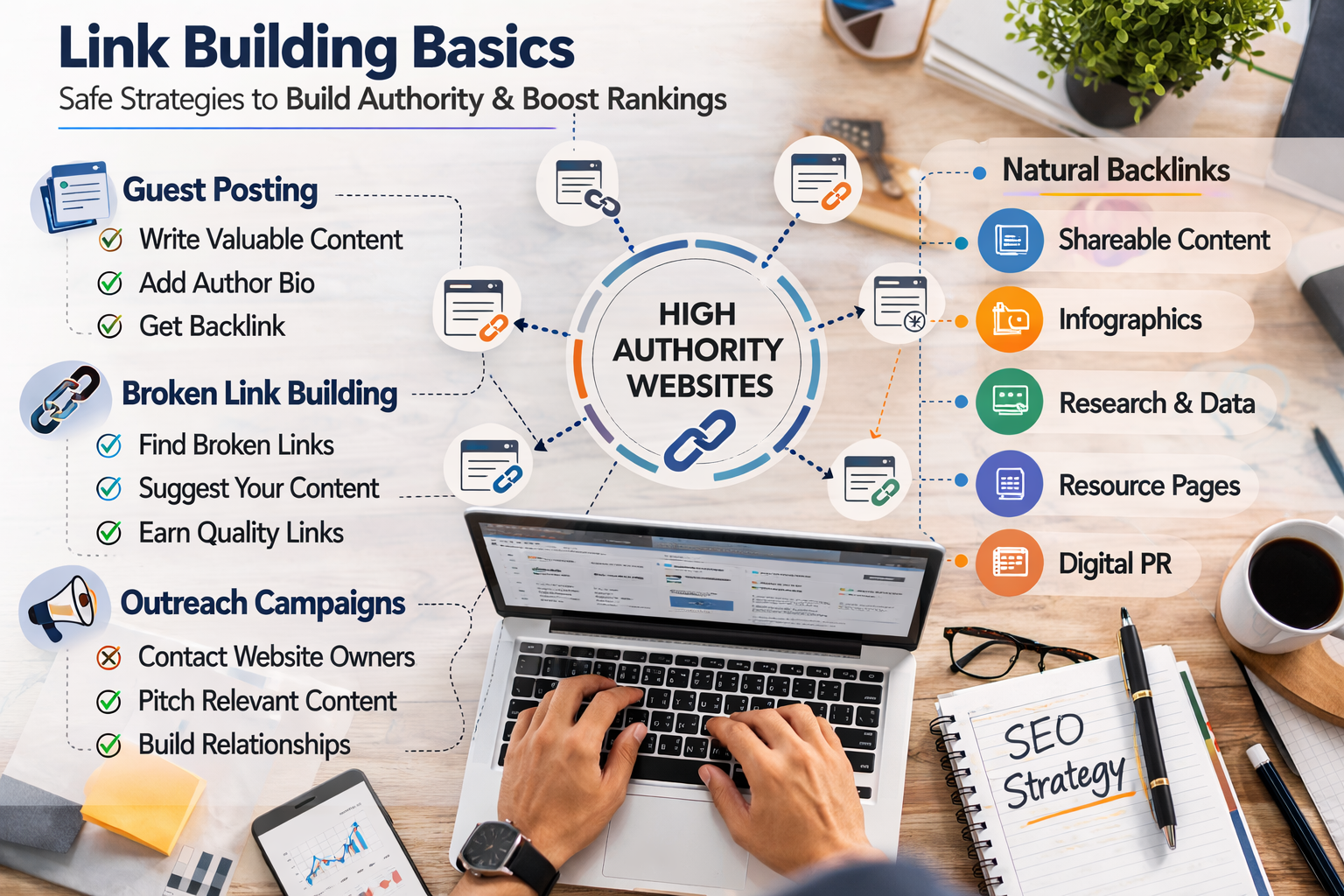
Website Authority (Off-Page SEO): Building credibility through backlinks, social signals, and brand mentions.
-
Technical Website Performance (Technical SEO): Ensuring your site functions efficiently with fast loading, mobile-friendliness, proper indexing, and structured data.
Search engines like Google and Microsoft Bing analyze thousands of signals—keyword relevance, page speed, content authority, and more—to determine which pages best satisfy a user’s query. Optimizing for these factors is the foundation of SEO fundamentals for beginners.
Why SEO Matters
SEO helps websites attract visitors who are already interested in your content, products, or services. Unlike paid advertising, which stops generating traffic once the campaign ends, SEO provides long-term visibility and results.
Key benefits of SEO include:
-
Higher Credibility: First-page listings are perceived as more trustworthy.
-
Better User Experience: SEO encourages clean site architecture, fast-loading pages, and mobile optimization.
-
Increased Brand Visibility: Higher rankings expose your brand to more potential customers.
-
Cost-Effective Traffic: Organic traffic is essentially free once your SEO strategy is in place.
Mastering SEO fundamentals for beginners helps attract the right visitors who are more likely to engage, convert, and become loyal customers.
Organic vs. Paid Search
When exploring SEO fundamentals for beginners, it’s essential to understand the difference between organic and paid search, because both impact how users find your website.
Organic Results:
Organic results appear naturally on the search engine results page (SERP) based on relevance, authority, and content quality. Unlike ads, these listings are not paid for. Ranking organically requires a combination of on-page SEO, off-page SEO, and technical SEO. Organic results are typically preferred by users because they are seen as more trustworthy and credible.
- Key advantage: Once optimized, organic traffic continues to flow over time without ongoing payments.
- Example: A blog post targeting the keyword “beginner SEO tips” can generate consistent traffic for months or even years if it ranks on the first page.
Paid Results:
Paid results are advertisements marked as “Ad” or “Sponsored.” They appear at the top or bottom of search results and require continuous investment through platforms like Google Ads. Paid search is effective for immediate visibility, but traffic stops as soon as the budget ends.
- Key advantage: Instant visibility for competitive keywords.
- Drawback: Short-term results; ROI depends on ongoing spending.
- Example: Running a Google Ads campaign for “buy SEO course” will drive clicks while active but won’t build lasting website authority.
Why it matters for beginners:
For those looking to learn SEO basics, focusing on organic results is crucial. Investing time in SEO creates a long-term, sustainable traffic source and builds authority, whereas paid ads are better for temporary campaigns or promotions.
The Three Pillars of SEO
A successful SEO strategy rests on three foundational pillars. Understanding these is essential when you learn SEO basics or explore SEO fundamentals for beginners.
1. On-Page SEO (Website Content)
On-page SEO refers to optimizing the content that users interact with directly on your website. This includes text, images, videos, and other media.
Key elements:
- Keywords: Use relevant search terms naturally within titles, headings, and body text.
- Content Quality: Provide in-depth, accurate, and engaging information that answers user queries.
- Headings and Structure: Organize content with H1–H3 headings to improve readability and SEO comprehension.
- Multimedia: Include images, videos, and infographics with descriptive alt text to enhance user experience and accessibility.
Example: A step-by-step SEO tutorial for beginners that includes screenshots, diagrams, and actionable instructions demonstrates both knowledge and value. This type of content not only helps users but also signals to search engines that your site provides high-quality information.
2. Off-Page SEO (Website Authority)
Off-page SEO focuses on building your website’s credibility and trustworthiness through external signals.
Key strategies:
- Backlinks: Links from reputable websites act as endorsements and strengthen your authority.
- Social Signals: Shares, mentions, and engagement on social media increase visibility and demonstrate relevance.
- Brand Mentions: Recognition by authoritative websites signals trustworthiness.
- Reviews and Testimonials: Positive feedback, especially for local businesses, boosts credibility and encourages user trust.
Example: If a well-known marketing blog links to your beginner SEO guide, search engines interpret this as a vote of confidence, helping your content rank higher.
3. Technical SEO (Website Performance)
Technical SEO ensures that your website is search-engine friendly, allowing crawlers to navigate and index your pages efficiently.
Key elements:
- Site Speed: Fast-loading pages enhance user experience and improve rankings.
- Mobile-Friendliness: Mobile-optimized sites perform better under mobile-first indexing.
- HTTPS Security: Secure websites are trusted by both users and search engines.
- Sitemap and Robots.txt: Help search engines discover and index your content efficiently.
- Structured Data: Schema markup enables rich results, such as FAQs, reviews, and product information.
Example: A slow-loading e-commerce site with excellent content and backlinks may still struggle to rank because technical issues prevent search engines from crawling or indexing pages properly.
Quality Content and E-E-A-T
When learning SEO fundamentals for beginners, one of the most important concepts is E-E-A-T: Experience, Expertise, Authoritativeness, and Trustworthiness.
Modern algorithms prioritize content that:
- Experience: Demonstrates real-world knowledge or practical application.
- Expertise: Is written by credible, knowledgeable individuals.
- Authoritativeness: Shows recognition by the industry or community.
- Trustworthiness: Provides accurate, transparent, and safe information.
Example: A detailed tutorial by a professional SEO marketer, including case studies and actionable tips, will rank higher than a generic article copied from multiple sources.
Takeaway: For beginners, focusing on creating high-quality, trustworthy content is essential when learning what is SEO and how to apply it effectively.
Organic Traffic vs. Paid Ads
A clear understanding of organic traffic versus paid ads is critical when implementing SEO strategies:
Organic Traffic:
- Builds gradually over time
- Generates visitors consistently with minimal ongoing effort
- Enhances long-term authority and visibility
Paid Ads:
- Provide immediate traffic
- Stop delivering visitors once the campaign ends
- Useful for short-term promotions or testing new products
Mobile-First Indexing and Page Speed
In 2026, understanding mobile-first indexing is a crucial part of SEO fundamentals for beginners. Search engines, especially Google, primarily evaluate the mobile version of your website when determining rankings. This means your site’s mobile performance directly affects visibility and traffic.
Key aspects to focus on:
- Responsive Design: A responsive website automatically adjusts its layout and content for different screen sizes, whether it’s a smartphone, tablet, or desktop. For beginners learning what is SEO, responsive design ensures that all users have a seamless experience, reducing bounce rates and increasing engagement.
- Example: A travel blog that adapts its text, images, and menus for mobile will keep readers engaged longer than a site with static desktop layouts.
- Fast Loading: Page speed is a ranking factor and a core part of user experience. Slow-loading pages frustrate users and increase bounce rates, negatively affecting your search performance. Optimizing images, using browser caching, and minimizing unnecessary scripts are practical steps for beginners learning SEO basics.
- Example: Compressing images and enabling lazy loading on a recipe website can reduce load times from 5 seconds to under 2 seconds, improving both rankings and user satisfaction.
Why it matters for beginners: Optimizing for mobile and speed is one of the first actionable steps for anyone learning SEO fundamentals for beginners, as it improves both user experience and search engine visibility simultaneously.
Essential SEO Tools
To effectively implement SEO fundamentals for beginners, you need tools that monitor performance, identify issues, and guide your strategy. Here are the key tools every beginner should learn:
- Google Search Console: Tracks indexing, crawling errors, and search performance. It helps you understand which keywords bring traffic and how your site appears in search results.
- Google Analytics: Provides insights into traffic sources, user behavior, and conversions. Beginners can use it to track the effectiveness of SEO campaigns and optimize content.
- Ahrefs: Offers backlink analysis, keyword research, and competitor insights. Understanding backlink profiles is essential for improving website authority.
- SEMrush: A comprehensive SEO toolkit for site audits, keyword tracking, and competitor analysis. It helps beginners implement SEO basics efficiently.
Practical tip: Regular use of these tools allows you to monitor progress, discover new opportunities, and continuously improve your SEO strategy, giving beginners a measurable path to mastering what is SEO in practice.
AI and Zero-Click Search Trends
Artificial intelligence is transforming SEO and search behavior. AI-driven search systems like ChatGPT and Bing Copilot now generate answers directly in search results. This leads to zero-click searches, where users get answers without visiting your site.
Strategies for beginners learning SEO fundamentals:
- Structure Content Clearly: Use headings, bullet points, and concise paragraphs to make your content easily scannable by both users and AI systems.
- Use Schema Markup: Schema helps machines understand your content, increasing the likelihood that it will appear in AI-generated answers.
- Optimize for Featured Snippets: Short definitions, tables, and lists increase your chances of being used as a direct answer in search results.
Example: A tutorial on “how to optimize images for SEO” formatted with step-by-step instructions, headers, and numbered lists may appear directly in an AI-generated snippet. This improves your site’s visibility, encourages citations, and enhances brand recognition even in zero-click scenarios.
Local SEO Ranking Factors
Local SEO ensures that your business appears in searches relevant to your location. For beginners learning SEO basics, understanding the three main ranking factors for local searches is crucial:
- Relevance: How closely your business matches the user’s query. Ensure that your website clearly communicates your services and offerings.
- Distance: Proximity to the searcher. Search engines factor in physical location when displaying results.
- Prominence: Your reputation and authority online. Reviews, ratings, and mentions contribute to prominence.
Optimization strategies for beginners:
- Set up and maintain a Google Business Profile with accurate information.
- Collect positive reviews to enhance credibility.
- Ensure consistent NAP (Name, Address, Phone) listings across directories and review platforms.
Example: A local coffee shop optimizing its Google Business Profile and collecting positive reviews can appear at the top of “best coffee shop near me” searches, increasing foot traffic and brand visibility.
Here is a Step-by-Step SEO Implementation Framework
A structured SEO implementation framework helps beginners systematically learn and apply SEO fundamentals for beginners. Here’s a detailed roadmap:
1. Conduct an SEO Audit
An SEO audit identifies technical issues and opportunities to improve your site’s search performance. For beginners learning what is SEO, an audit reveals what’s working and what needs improvement.
Key steps in an audit:
- Check site speed using Google PageSpeed Insights or GTmetrix.
- Identify broken links and 404 errors.
- Review mobile usability and responsive design.
- Evaluate indexing and crawlability using Google Search Console.
- Analyze existing content quality and keyword targeting.
Example: A small e-commerce site discovered several slow-loading pages and missing meta descriptions during an audit. Addressing these issues improved rankings and user engagement.
2. Perform Keyword Research
Keyword research is foundational for learning SEO basics. It identifies the terms and phrases users search for online and informs your content strategy.
Steps for effective keyword research:
- Use tools like Google Keyword Planner, Ahrefs, SEMrush, or Ubersuggest.
- Identify high-volume, low-competition keywords relevant to your niche.
- Group related keywords into topic clusters to demonstrate expertise to search engines.
- Consider search intent (informational, navigational, transactional, commercial investigation).
Example: For a beginner SEO blog, a keyword cluster might include:
- “What is SEO?” (informational)
- “Learn SEO basics” (informational)
- “Beginner SEO tips” (transactional/informational)
3. Optimize On-Page Elements
On-page SEO ensures each page is structured for both users and search engines. Beginners learning SEO fundamentals for beginners should focus on:
- Titles & Meta Descriptions: Include target keywords naturally and make them compelling.
- Header Tags (H1, H2, H3): Organize content logically for readability.
- Keyword Placement: Naturally incorporate primary and secondary keywords in headings, introduction, and body text.
- Multimedia Optimization: Add images, videos, and infographics with descriptive alt text and optimized file sizes.
Example: A step-by-step guide on “learn SEO basics” could include screenshots, numbered lists, and tables to enhance readability and rankability.
4. Improve Technical SEO
Technical SEO ensures search engines can crawl, index, and understand your site efficiently. This includes:
- Site Speed: Optimize images, leverage caching, and remove unnecessary scripts.
- Mobile Usability: Ensure responsive design and fast mobile loading.
- Indexing & Crawlability: Maintain XML sitemaps, robots.txt, and canonical tags.
- HTTPS Security: Secure your website to build trust with users and search engines.
Example: An e-commerce site improved mobile page speed and fixed duplicate content issues, leading to higher rankings and lower bounce rates.
5. Build Authority & Backlinks
Authority signals show search engines that your content is trustworthy. Beginners should focus on:
- Backlinks: Acquire links from reputable sites through guest posts, partnerships, or digital PR.
- Brand Mentions & AI Citations: Even unlinked mentions help build credibility.
- Social Media Amplification: Share content to reach broader audiences and attract potential links.
Example: A beginner SEO blog published a high-quality guide on “what is SEO,” then promoted it to relevant industry blogs, earning backlinks that boosted domain authority.
6. Measure & Improve Performance
SEO is ongoing. Tracking performance ensures that efforts are effective and identifies areas for improvement.
Key metrics to monitor:
- Organic traffic growth
- Keyword rankings and CTRs
- Bounce rates and session duration
- Backlink acquisition
- Conversions and goal completions
Example: Using Google Analytics and Search Console, a beginner SEO site discovered certain keywords were underperforming, prompting content updates that increased organic traffic by 35% in three months.
Common SEO Mistakes to Avoid
Beginners often make mistakes that hinder progress. Avoiding these is essential for anyone learning SEO fundamentals for beginners:
- Ignoring Search Intent: Not tailoring content to what users are searching for.
- Keyword Stuffing: Overloading pages with keywords, which harms readability and rankings.
- Poor Mobile Optimization: Failing to provide a responsive, fast experience.
- Thin or Duplicate Content: Publishing low-quality or copied content.
- Broken Links & Poor Navigation: Confuses users and search engines.
- Neglecting Analytics Tracking: Missing opportunities to improve performance.
- Overlooking Local SEO: Failing to optimize for local searches when relevant.
Example: A local business ignored mobile optimization and lost significant rankings after Google’s mobile-first indexing update.
Modern SEO Trends (AI and Generative Search)
SEO is evolving rapidly. Beginners should understand these trends to stay ahead:
- AI-Powered Search Results: Search engines provide direct answers using AI, often reducing clicks.
- Answer Engine Optimization (AEO): Structure content so AI systems can extract clear answers.
- Entity SEO & Knowledge Graphs: Map topics as entities to provide context and relevance.
- E-E-A-T & Experience Signals: Real expertise and trustworthiness are stronger ranking factors than ever.
- Voice & Multimodal Search: Optimize for voice commands, images, and video queries.
- Multichannel Search Behavior: Ensure consistent, high-quality content across search engines, social media, and AI platforms.
Example: A guide structured for both text and voice queries, with clear headings and schema markup, ranks better for AI-driven search results.
SEO FAQ
What is SEO and how does it work?
SEO improves websites so search engines can crawl, index, and rank them in organic search results.
Why is SEO important?
SEO drives long-term traffic, increases online visibility, and builds authority.
What is keyword research?
Identifies the search terms users type into search engines, guiding content strategy.
What is on-page SEO?
Optimizes titles, headings, images, and content directly on your website.
What is off-page SEO?
Builds authority through backlinks, mentions, and social signals.
How long does SEO take to work?
Typically, measurable results are seen in 3–6 months depending on competition and effort.
SEO Fundamentals Key Takeaways
- SEO improves website visibility in search engines and drives targeted traffic.
- Successful strategies combine content, authority, and technical optimization.
- Matching search intent is critical for ranking and user satisfaction.
- Structured, trustworthy content is essential for AI-powered and zero-click search.
- Consistent SEO efforts generate long-term organic traffic and sustainable growth.