


How AI Search Engines Choose Which Websites to Cite
Search is changing fast. AI-powered search engines, often called generative search or answer engines, are transforming how people discover information online.
Instead of returning a list of “blue links,” these systems use large language models (LLMs) to interpret questions, generate answers, and cite trusted sources across the web.
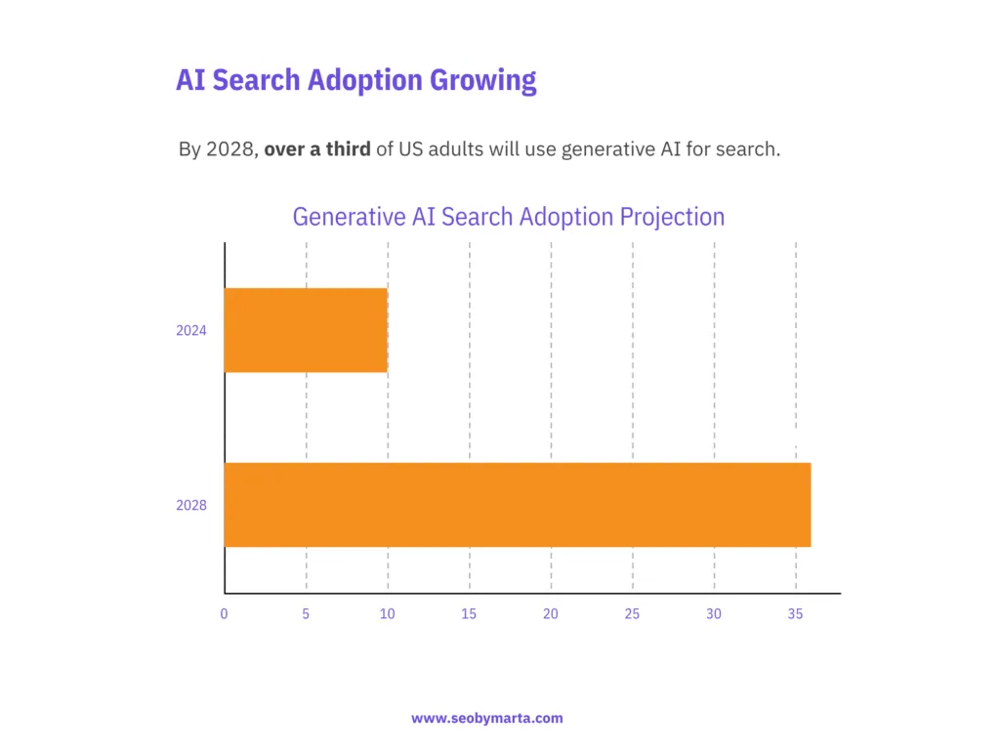
This shift is already changing user behavior. Research from SparkToro and Similarweb shows that more than half of Google searches now end without a click, while forecasts suggest over one-third of U.S. adults could use AI-powered search platforms by 2028.
For publishers, marketers, and businesses, the implications are significant.
SEO is no longer just about ranking at the top of search results. Increasingly, visibility depends on whether AI systems choose your content as a trusted source to cite inside generated answers.
In other words, success in modern search means becoming a credible reference, not simply a high-ranking page.
In this guide, we break down how AI search engines choose websites to recommend, based on current research, search engine guidance, and observed behavior across platforms like ChatGPT, Google AI Overviews, Perplexity, and Microsoft Copilot.
What you will learn:
• how AI search engines actually work
• the signals that influence AI citations
• the 10 factors that increase the chance your site gets referenced
• practical ways to optimize your content for AI-driven search

Understanding How AI Search Engines Work
Traditional search engines rank web pages primarily using signals such as backlinks, keyword relevance, and site authority.
AI search engines take a different approach.
They analyze the meaning and intent behind a question, retrieve relevant sources from search indexes, and generate a synthesized answer using information from multiple pages.
Most modern AI search systems combine several technologies:
• Large language models (LLMs) to interpret natural language queries
• Search indexes to retrieve relevant web pages
• Knowledge graphs to identify entities like brands, people, and products
• Ranking models that evaluate credibility and relevance
When a user asks a question, the system retrieves several relevant sources, evaluates their reliability, and generates a response—often citing those sources directly.
This means your content doesn’t simply need to rank well.
It needs to be clear, authoritative, and easy for AI systems to extract information from.
What Are AI Search Engines?
AI search engines are platforms that generate answers to questions rather than just displaying links.
They use artificial intelligence, machine learning, and natural language processing to understand queries and summarize information from multiple sources.
Examples include:
• ChatGPT (OpenAI)
• Google AI Overviews (Gemini)
• Microsoft Copilot (Bing Chat)
• Perplexity AI
• You.com
Most of these tools combine trained language models with live web search results, allowing them to generate responses while also citing external sources.
For users, this creates a faster experience.
Instead of opening several websites, they receive a summarized answer immediately.
For publishers, however, the challenge is different: earning a citation within that answer.
Why Understanding AI Search Ranking Matters for SEO
The rise of AI-powered search is reshaping how websites gain visibility.
Many traditional SEO fundamentals still matter, such as high-quality content, technical performance, and backlinks, but their role is evolving.
AI systems increasingly prioritize signals like:
• content clarity and answerability
• topical authority
• trust and credibility signals
• structured, machine-readable content
Early research also suggests AI citations have a compounding effect.
Once a website becomes a trusted source for a topic, AI systems may continue citing it because it has already proven reliable.
At the same time, AI answer panels are reducing clicks for many informational queries.
Some publishers report traffic declines when AI Overviews appear, yet visits that do come from AI answers often show higher engagement and longer dwell time.
For SEO teams, the takeaway is simple:
Visibility in search now depends on both traditional rankings and AI citations.
Key Takeaways
Before diving deeper, here are the most important insights about AI search:
• AI search engines prioritize clear, structured answers over keyword density.
• Topical authority and expertise strongly influence AI citations.
• Trust signals and factual accuracy play a major role in source selection.
• Structured formatting helps AI extract and summarize content.
• SEO strategies must now optimize for both rankings and AI visibility.
10 Factors AI Search Engines Use to Choose Websites
Although AI systems rely on complex algorithms, their source selection generally comes down to a combination of authority, relevance, structure, and trust signals.
Based on research and observed AI search behavior, the following factors consistently influence which websites are cited inside generated answers.
1. Content Quality and Depth
AI search engines favor comprehensive, well-researched content.
Pages that explain a topic thoroughly are more likely to be cited than short, surface-level articles.
However, depth alone is not enough. The information also needs to be easy to interpret.
Content tends to perform better when it includes:
Thorough answers — covering the main topic and related questions
Clear organization — headings, bullet points, and structured sections
Unique insights — original data, research, or expert commentary
AI models prefer information they can quote clearly, which makes well-structured explanations especially valuable.
2. Topical Authority
AI systems are more likely to cite websites that consistently publish high-quality content within a specific subject area.
This is known as topical authority.
When a website repeatedly covers a topic in depth, search engines begin to recognize it as a reliable source.
Signals that strengthen topical authority include:
Consistent coverage — publishing multiple related articles within a topic cluster
Subject expertise — content written by knowledgeable authors
Industry recognition — citations or mentions from reputable websites
Over time, this focused coverage increases the chances that AI tools treat the site as a trusted reference.
3. Trust Signals and Credibility
Trust plays a central role in AI-generated answers.
Search systems often rely on principles similar to Google’s E-E-A-T framework: Experience, Expertise, Authoritativeness, and Trustworthiness.
Content with strong credibility signals is more likely to be cited.
Common indicators include:
Transparent authorship — named authors with professional biographies
First-hand experience — insights based on testing, research, or practical work
Credible citations — links to studies, institutions, or official data
Editorial transparency — publication and update dates
Content that demonstrates real expertise and cites reliable sources provides stronger evidence of trustworthiness.
4. Semantic Relevance to Search Intent
AI search engines rely heavily on semantic understanding, meaning they interpret the intent behind a query rather than simply matching keywords.
For example, a user searching for “how to rank in AI search results” may receive results about:
• AI SEO strategies
• generative search optimization
• answer engine optimization
Content that clearly aligns with the underlying question or intent is more likely to be cited.
Useful practices include:
Intent alignment — answering the specific question directly
Contextual language — using related concepts and terminology
Definition-style explanations — providing concise answers early in sections
5. User Engagement Signals
AI search platforms also observe how users interact with cited content.
Engagement signals help determine whether the information actually satisfies the query.
Important signals include:
Click-through rate (CTR) — how often users click cited sources
Dwell time — how long visitors stay on the page
Bounce rate — whether users quickly return to search results
Pages that consistently satisfy users are more likely to be cited again in future answers.
6. Content Freshness
AI systems often prioritize up-to-date information, particularly for topics that change frequently.
Signals of freshness include:
Recent publication dates
regular content updates
new data or statistics
Refreshing older content periodically can significantly improve its relevance for AI answers.
7. Backlinks and Brand Mentions
Backlinks remain an important credibility signal, although they may carry less direct weight in AI search than in traditional rankings.
High-quality references from authoritative websites help reinforce trust.
Equally important are brand mentions, even without links.
Mentions across articles, forums, and media outlets help AI systems recognize your brand as a legitimate entity.
8. Structured Data and Content Formatting
AI search engines perform best when content is well structured and machine-readable.
Helpful formatting elements include:
Schema markup — such as Article, FAQ, and HowTo schema
clear headings — H1, H2, and H3 sections
lists and tables — easy-to-extract information blocks
concise answer paragraphs
These structures make it easier for AI models to extract relevant information and quote it accurately.
9. Technical Website Performance
Technical SEO remains essential for discoverability.
AI crawlers still rely on traditional search infrastructure to access web content.
Key technical factors include:
site speed and Core Web Vitals
mobile-friendly design
clean crawlable URLs
secure HTTPS connections
A fast, accessible site ensures your content can be indexed and considered for AI answers.
10. Brand Reputation and Recognition
Strong brands often benefit from implicit trust.
If a company or website is widely recognized in its industry, AI systems are more likely to treat it as a reliable source.
Signals that strengthen brand reputation include:
media coverage
industry partnerships
knowledge graph presence
verified social profiles
While authority ultimately depends on expertise, recognizable brands often have an advantage in establishing credibility.
How to Optimize Your Website for AI Search
To improve the chances that AI systems cite your content, focus on several practical strategies.
Answer questions clearly
Structure your content so each section directly addresses a specific user question.
Use structured formatting
Headings, lists, and short explanation blocks make information easier for AI systems to extract.
Build topical authority
Publish clusters of related articles that explore a subject in depth.
Highlight expertise
Include author bios, research references, and evidence-based insights.
Maintain technical performance
Fast load speeds and strong Core Web Vitals remain essential.
What is The Future of SEO in the Age of AI Search
AI-generated answers are becoming a core feature of modern search engines.
Rather than replacing traditional search entirely, AI is creating a hybrid experience where users receive both generated summaries and traditional search results.
For content creators and businesses, the key shift is strategic.
SEO is moving beyond simple keyword rankings toward authority, clarity, and trustworthiness.
Websites that provide genuine expertise, structured information, and reliable data are far more likely to be cited as sources in AI answers.
Those that focus only on keyword optimization will struggle to compete.
FAQ
What are AI search engines?
AI search engines generate answers to questions using artificial intelligence rather than simply displaying lists of web pages. They interpret queries, analyze multiple sources, and produce summarized responses with citations.
How do AI search engines work?
They use large language models to understand a query’s meaning, retrieve relevant sources from search indexes, evaluate credibility, and generate a synthesized answer.
How are AI search engines different from traditional search?
Traditional search engines rank pages and show links. AI search engines generate answers directly and cite sources within the response.
How can my website appear in AI answers?
Create structured, high-quality content that clearly answers user questions. Strong expertise signals, credible sources, and clear formatting increase the chances of being cited.
Will AI replace traditional search engines?
Not entirely. AI is becoming an important layer within search results, but traditional search listings continue to exist alongside AI-generated answers.